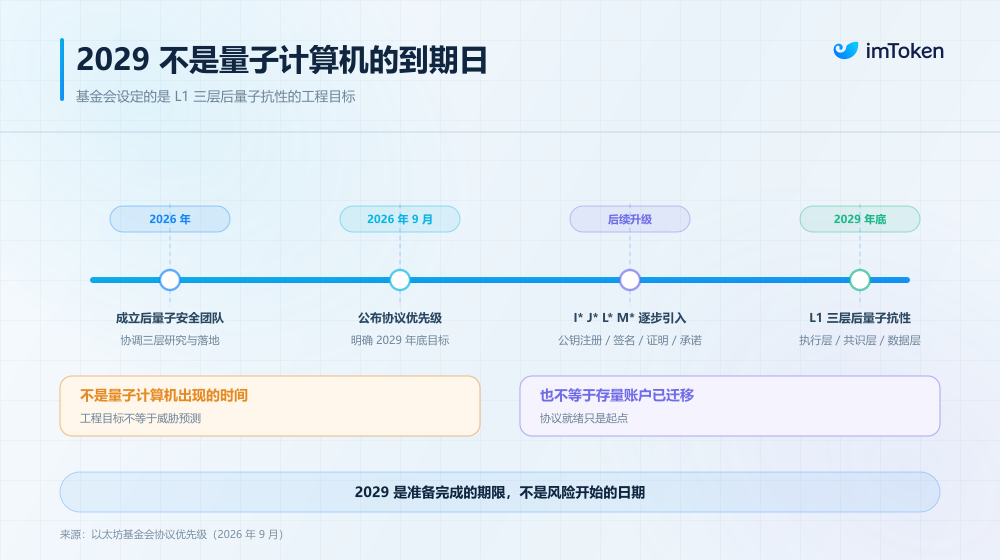
In an analysis published on November 18, 2026, imToken examined Ethereum’s preparations for a potential future quantum-computing threat. The key calendar milestone was a target, not a scheduled completion: protocol priorities published in September 2026 aimed to make Ethereum L1 resistant to quantum attacks across its execution, consensus and data layers before December 2029.
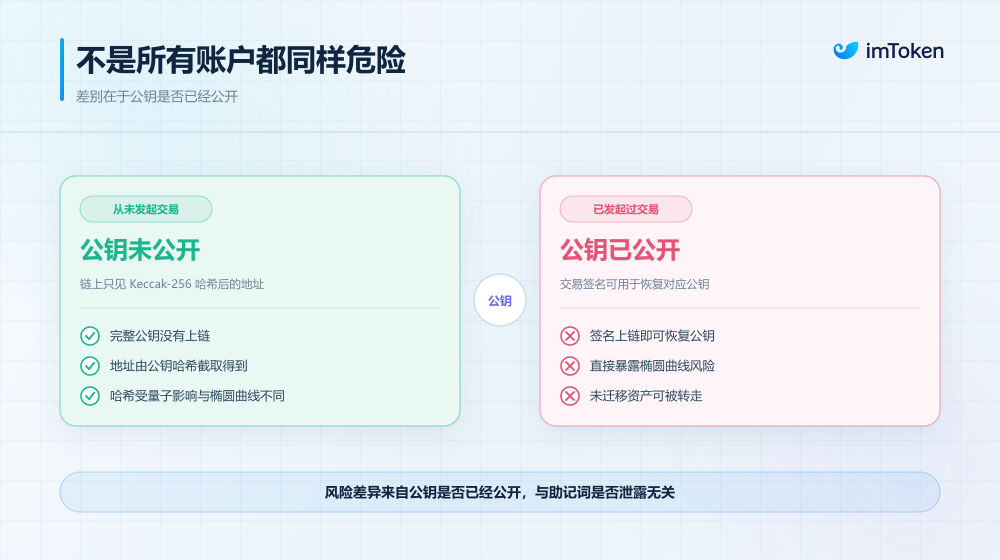
The concern is that a sufficiently capable fault-tolerant quantum computer could, in theory, undermine the elliptic-curve cryptography used by Ethereum’s ECDSA account signatures and BLS validator signatures. ImToken noted that no quantum computer capable of breaking this cryptography existed at the time of its report. It also distinguished accounts whose public keys had been exposed through a transaction signature from unused accounts for which only a hashed address was publicly visible.
What the proposed changes cover
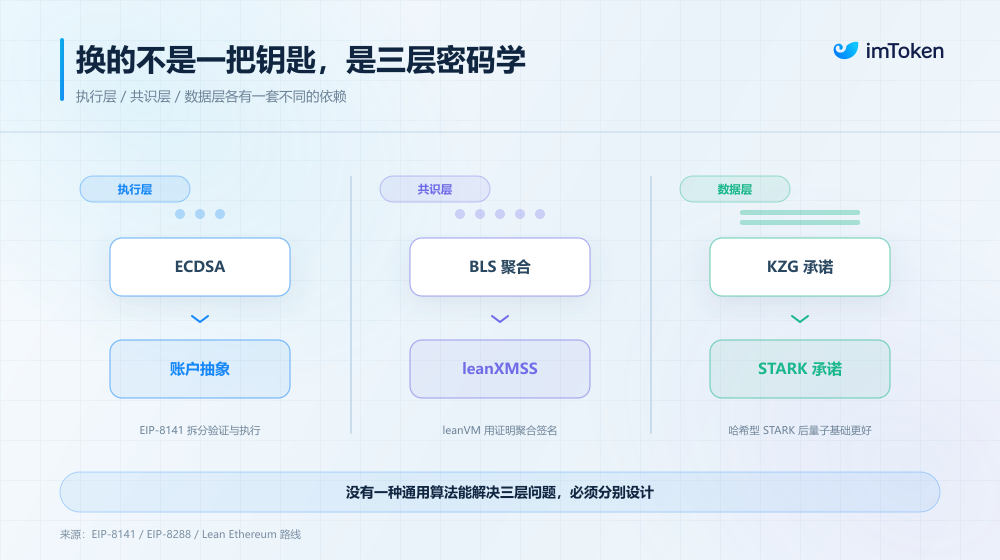
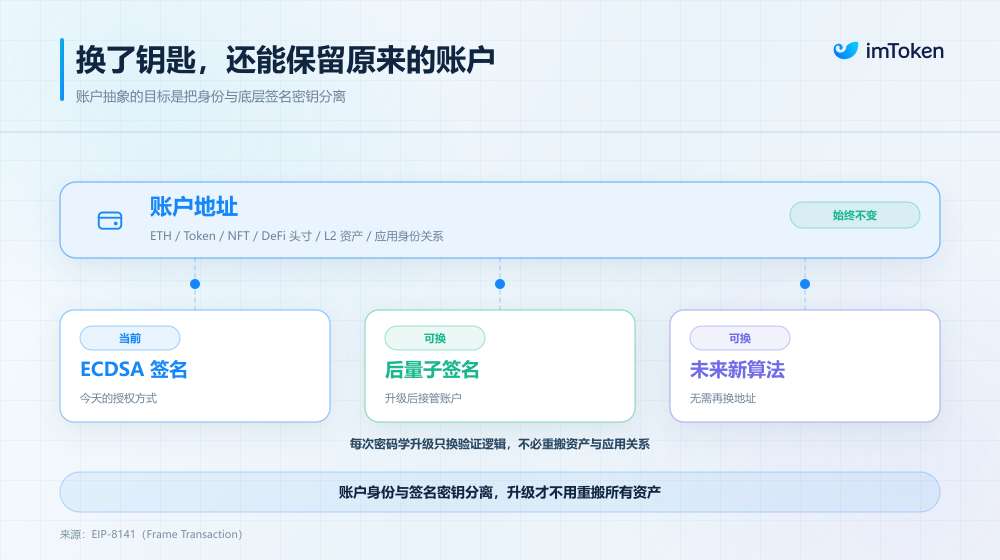
- Execution layer: Native account abstraction, including the proposed EIP-8141, could let accounts change their validation rules rather than remain permanently tied to one ECDSA key. Ethereum was also studying post-quantum signature verification. The proposed EIP-8288 explored aggregating verification results to limit the costs of larger signatures.
- Consensus layer: The Lean Ethereum approach explored leanXMSS, a hash-based signature scheme, as a possible replacement for validator BLS signatures. It also explored leanVM to aggregate proofs without imposing the full cost of individual signatures on the network.
- Data and applications: Ethereum’s KZG commitments, used in blob and rollup data availability, rely on cryptographic assumptions that also need review. ImToken noted that some pairing-based SNARK systems face related questions, while hash-based STARKs avoid the same elliptic-curve assumption.
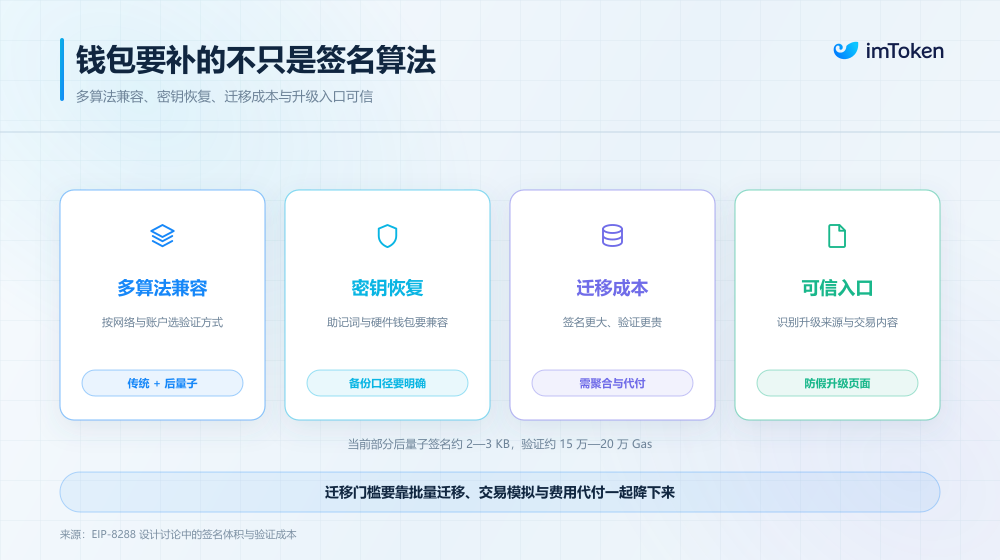
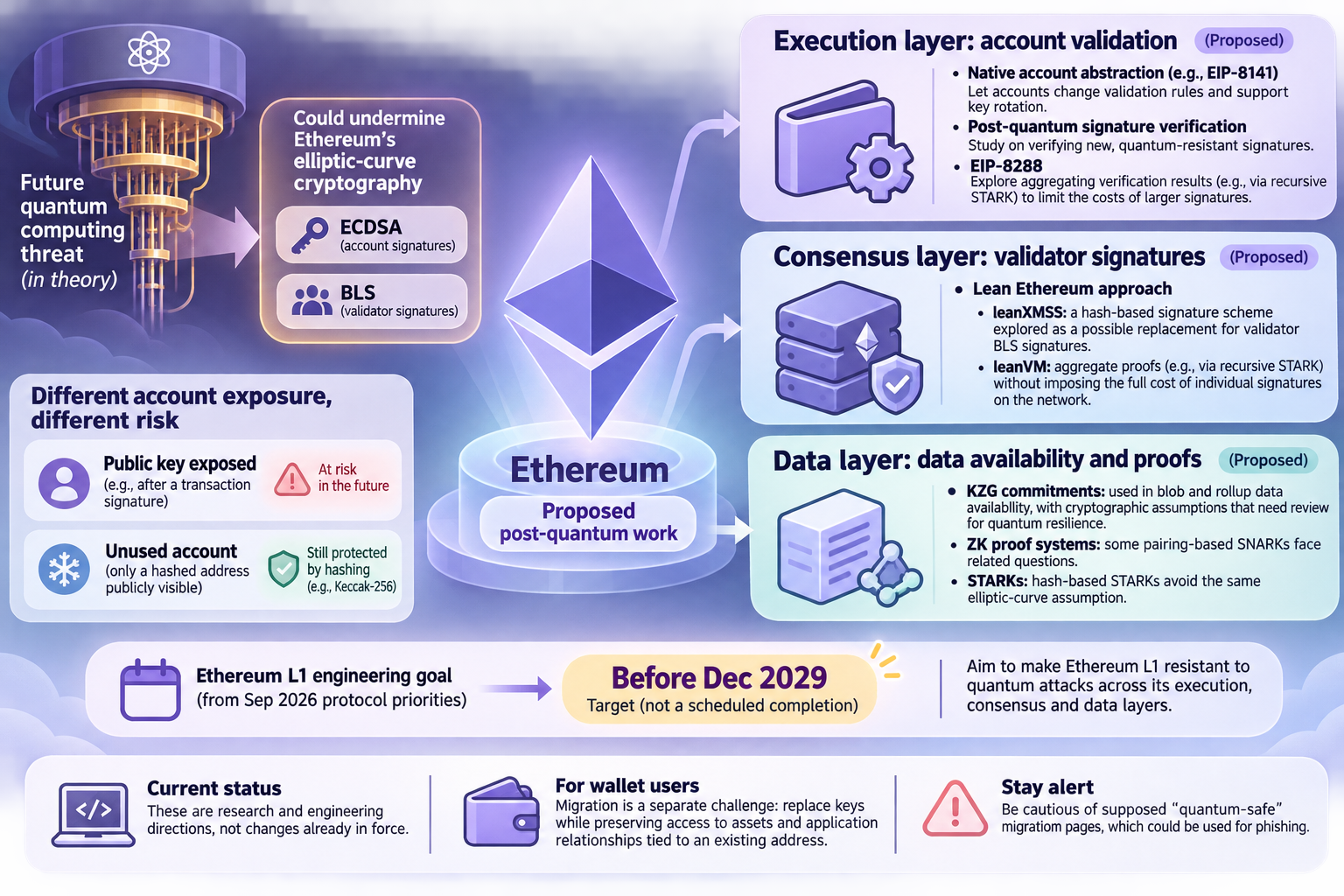
These are research and engineering directions, not changes already in force. For wallet users, imToken identified migration as a separate challenge: replacing a key may require preserving access to assets and application relationships tied to an existing address. Authorizing a new key while the old signature system remains secure would be simpler than establishing ownership after that system became vulnerable. The report also warned that supposed “quantum-safe” migration pages could be used for phishing.
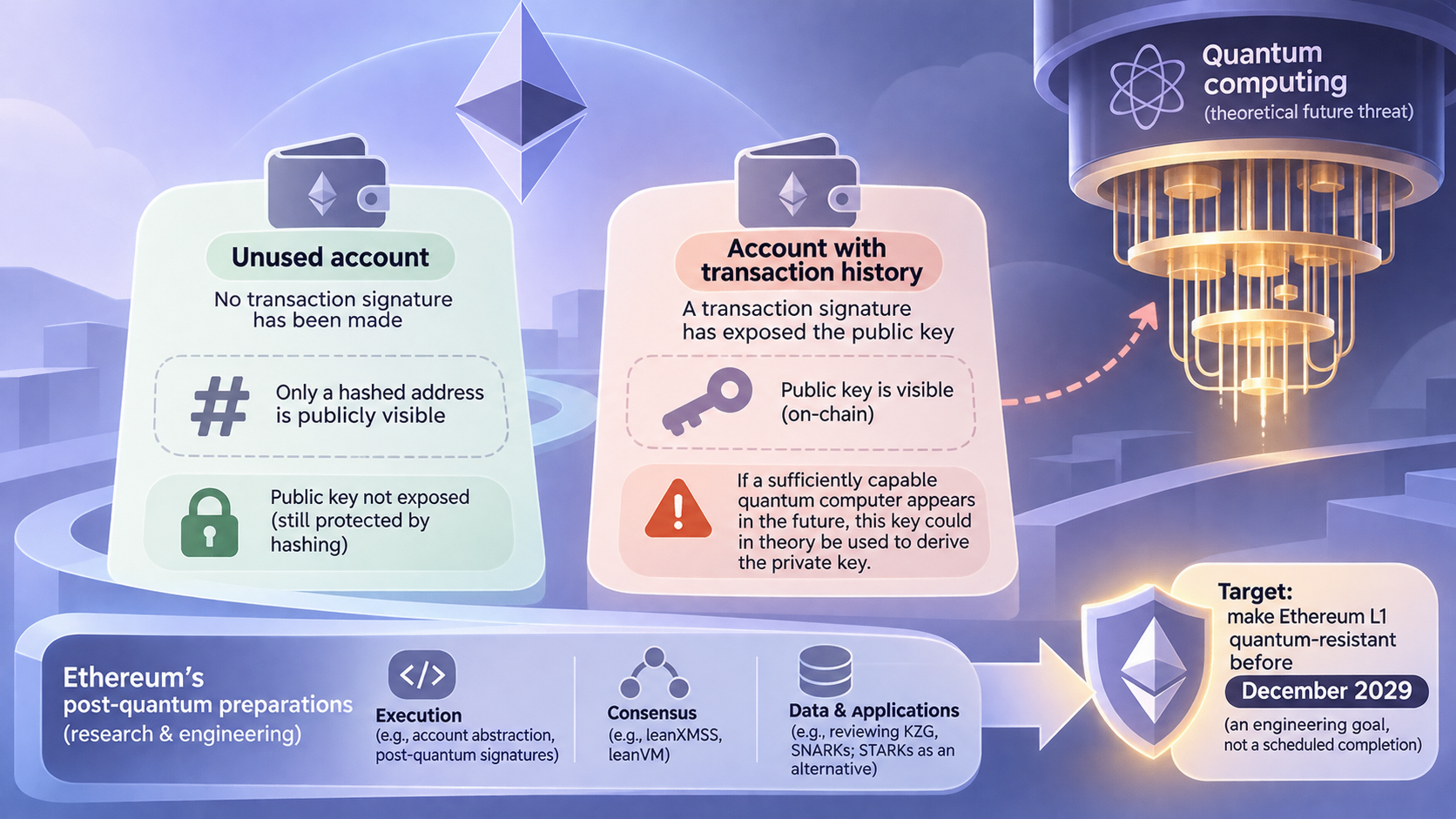
As of the November 2026 report, there was no reason for users to move assets urgently because of quantum computing. The December 2029 date described an Ethereum L1 engineering goal; the source did not establish that the upgrade would be completed by then or specify a user migration date.