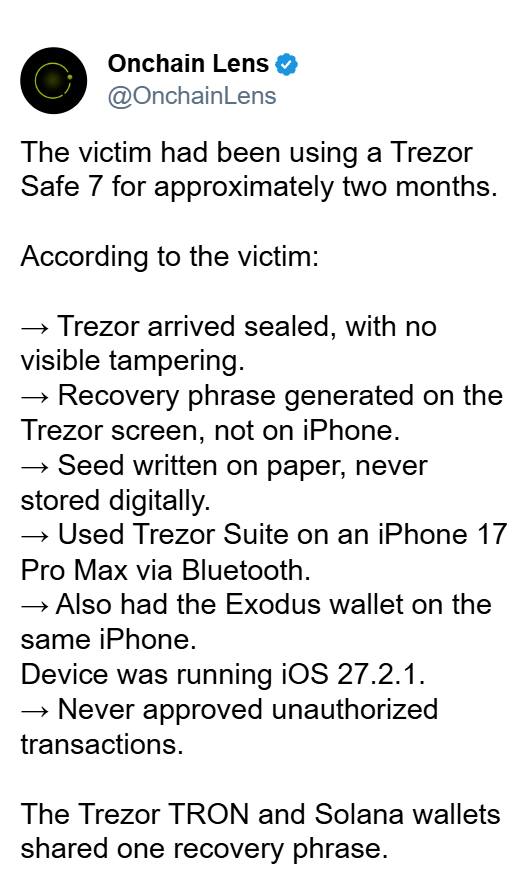
On November 23, 2026, Onchain Lens reported that one user had lost approximately $580,000 in USDT on TRON and $23,400 in USDC on Solana from Trezor accounts. The investigator reported a further $9,500 missing from an Exodus wallet on the same iPhone 17 Pro Max. As of November 24, the cause remained unknown.
What the transactions show
On November 21, a direct transfer of 49,999 USDT used the TRON account’s default owner permission rather than an existing token allowance. On Solana, the transaction instruction examined by Onchain Lens listed the user’s wallet as the transfer authority, signer and fee payer. No separate delegate appeared.
Those records show that the transfers used the accounts’ signing authority. They do not identify who signed or establish that the user knowingly approved either transfer.
What remains unconfirmed
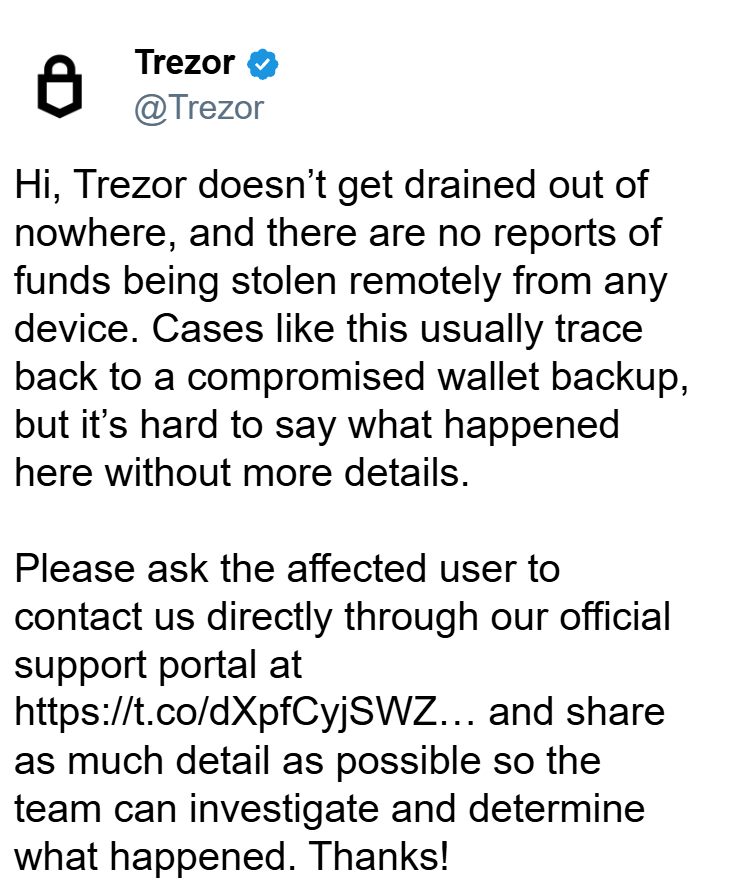
The two Trezor accounts shared a recovery phrase. The user said they generated it on the Trezor, kept it on paper and did not give anyone physical access to the device. In a reply on X, Trezor said similar cases usually involved “a compromised wallet backup,” but said it lacked enough detail to determine what happened here. It asked the user to contact official support.
Trezor says its Bluetooth chip cannot access private keys. Exodus says its Trezor integration keeps those keys on the hardware, but it was unclear whether the user had enabled the integration. Apple patched Bluetooth issues on November 9; Onchain Lens found no evidence connecting them to the transfers.
Earlier incidents do not establish a cause in this case. On November 12, Trezor confirmed that implants in three Safe 5 devices sold by CryptoBilis had captured recovery words from device screens. Separately, Confiant’s MoldyRoost research documented malicious ads delivering exploits to vulnerable iPhones. Neither finding explains how someone obtained signing access to this user’s wallets.
For context, Chainalysis counted roughly 158,000 personal-wallet compromise incidents affecting 80,000 victims in 2025.